How To Balance Natural And Artificial Lighting begins with a simple observation: daylight changes constantly. Morning sun may brighten a desk, while clouds can leave the same room feeling flat minutes later. Good lighting plans respond to those shifts instead of treating every room as a fixed, evenly lit box.
The U.S. Department of Energy reports that residential LED bulbs use at least 75% less energy and last up to 25 times longer than incandescent lighting. That makes efficient artificial light a useful partner to daylight, not merely a backup. Still, efficiency alone does not guarantee comfort. Glare on a laptop, a dark corner beside a window, or a harsh ceiling fixture can undermine an otherwise thoughtful setup.
Circadian-lighting researcher Dr. Mariana Figueiro has described light as “the most important environmental input to the human circadian system.” Her research focuses on light’s effects on people, a reminder that brightness and timing both matter. In practice, that might mean welcoming soft morning daylight, then using adjustable lamps as evening approaches. There is no perfect formula for every home. Window direction, season, wall color, and personal preference all complicate the picture. These seven tips offer practical starting points for combining daylight and electric light, while leaving room to notice what feels wrong and adjust.
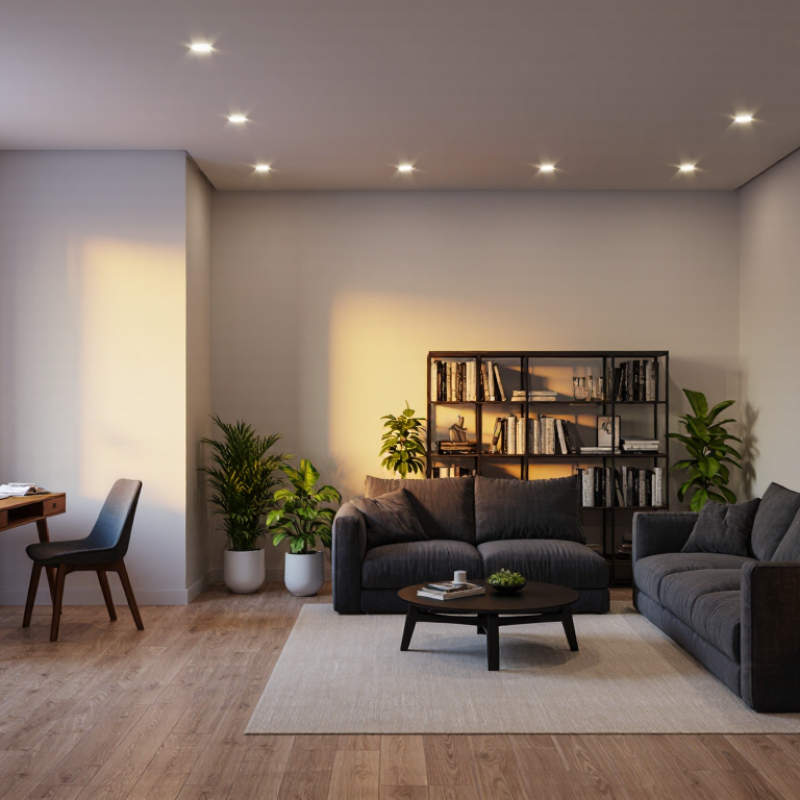
A balanced lighting plan starts with measured daylight, not guesswork. Walk through the room at different times and record changes near windows, desks, and darker corners. Note seasonal differences too. Winter daylight can be surprisingly weak. EN 17037 provides a framework for evaluating daylight provision, view out, sunlight exposure, and glare. Its recommendations should be read with the relevant national guidance and project use in mind.
Check window size, orientation, glazing, room depth, surface reflectance, and nearby obstructions. These details affect how far daylight travels. Use illuminance measurements or climate-based simulations across the year. Compare the results with the appropriate EN 17037 target for the space. Do not treat one bright afternoon as proof of compliance. It is not. A daylight model can also miss blinds, furniture, dust, or changing occupancy patterns.
Use artificial lighting to support areas that daylight cannot reliably reach. Select adjustable layers for general, task, and circulation lighting. Keep fixtures away from windows when possible, then control them separately from the interior zones. Test glare at seated eye level, especially beside screens. Ask occupants where discomfort appears. Their feedback often reveals problems that calculations overlook. A useful design may still need revision. Balance is not a fixed ratio between daylight and electric light; it is a practical response to changing conditions, visual tasks, and human comfort.
For typical office desk work, EN 12464-1 sets a maintained illuminance target of 500 lx. This means 500 lumens per square metre on the working surface. Measure the desk plane, not the ceiling or nearby wall. A calibrated lux meter gives more reliable results than visual judgment. Human eyes adapt quickly, which can hide dim areas.
Daylight should support the target, not replace it. Place desks near windows when possible, but control direct sun with adjustable blinds. Reflections from screens, glossy paper, and pale walls can create discomfort. Use dimmable artificial lighting to fill darker periods without making the room harsh. Keep fixtures clean, and check whether furniture blocks the light. Small changes matter.
A 500 lx reading can still feel wrong. Glare, uneven brightness, and deep shadows may reduce comfort. Recheck the desk in the morning, at midday, and on a cloudy afternoon. Record each result. The number may shift more than expected. A practical setup often needs several adjustments before it feels balanced. Do not chase brightness alone. Consider the screen angle, the user’s posture, and the task’s visual detail. If one desk meets 500 lx but another falls below it, improve distribution rather than simply increasing every lamp. This approach is not perfect, but repeated measurement reveals what assumptions missed.
A bright window can improve comfort, but uncontrolled daylight often creates screen reflections and sharp contrast. In office projects, I begin with a simple test: place a laptop at the user’s normal viewing angle, then observe morning and afternoon glare. EN 12464-1 identifies UGR≤19 as a common glare limit for office workspaces. It also recommends Ra≥80 for many indoor tasks. These values should guide fixture selection, not replace onsite checks.
Tip 1: Control the window first. Use adjustable blinds or light-filtering shades, keeping daylight on the ceiling and walls rather than directly on screens. The CIE’s lighting guidance emphasizes balanced luminance and controlled contrast for visual comfort. A window may measure bright but still feel pleasant when its light is softened. I sometimes overestimate this effect.
Tip 2: Add artificial light carefully. Choose luminaires with documented UGR≤19 and Ra≥80, then position them perpendicular to display screens. Avoid placing bright fixtures directly behind users or opposite glossy monitors. The U.S. Department of Energy reports that LED lighting can use at least 75% less energy than conventional incandescent lighting, supporting efficient layered lighting. However, lower energy use does not guarantee visual comfort.
Tip 3: Check the room at different times. Measure workplane illuminance near the window, in the middle, and at the back. Keep curtains, furniture, and wall finishes in the review. A well-balanced space may need less electric light at noon, but more after sunset. The best setting is rarely perfect all day.
Window light can reduce energy use, but glare control and color quality must remain within comfortable limits. This comparison uses the commonly applied targets of UGR ≤ 19 and Ra ≥ 80.
The example measurements show typical office lighting conditions at different distances from a window. All tested areas remain below the UGR 19 glare limit and above the Ra 80 color-rendering minimum. Use blinds, diffusers, dimming, and layered task lighting to keep daylight and artificial light balanced throughout the day.
Evening light should feel calm, not cave-like. If a space must support WELL’s 150-lx melanopic EDI target, measure light at eye level, where occupants actually sit or stand. Do not estimate brightness from ceiling fixtures alone. Use daylight near windows before sunset, then reduce overhead output gradually. Keep blinds partly open when outdoor glare remains comfortable. My first setup was too bright. It met visual needs but felt harsh after dinner.
Layer the room carefully. Use softer wall or floor lighting instead of one powerful ceiling source. Place reading light near the page, while keeping the surrounding area dimmer. Select warmer evening light, but check its measured melanopic effect rather than trusting color appearance. Aim fixtures away from faces and glossy screens. Add dimming controls within easy reach. Small adjustments matter.
Track the result for several evenings. Note headaches, eye strain, alertness, and sleep timing. A simple light meter can reveal uneven zones, although professional testing is more reliable. Measure after furniture, curtains, and lamps are in their final positions. Recheck the 150-lx melanopic EDI level when daylight changes. The target may fit one room but feel excessive in another. Human responses vary, and that uncertainty deserves attention.
Natural and Artificial Lighting: Recheck Light Levels Across Different Times and Seasons
Light changes more than most lighting plans assume. Measure desk-level illuminance at 9 a.m., noon, and 4 p.m. Test near windows and deeper inside the room. Repeat these checks around the summer and winter solstices. The IES Lighting Handbook, 11th Edition, commonly recommends about 300–500 lux for office tasks. However, a single reading can hide glare, screen reflections, or dark corners. Use a calibrated lux meter when possible, and record weather conditions beside every result.
Observe the room before adjusting equipment. Lower blinds when direct sunlight creates sharp patches on the floor. Raise them when winter daylight fades early. Set dimming controls to support daylight, not compete with it. The U.S. Department of Energy reports that daylight-responsive controls can produce meaningful lighting-energy savings, although results depend heavily on building design and user behavior. CIE S 026/E:2018 also encourages evaluating light by its visual and non-visual effects, rather than brightness alone. A bright room may still feel tiring.
Small changes matter. Move desks away from reflective glass. Use diffuse, low-glare fixtures. Recheck levels after cleaning windows or changing furniture. My first lighting schedule was too rigid; cloudy afternoons proved it wrong. That mistake remains useful. People override systems that feel uncomfortable. Ask occupants what they notice, then compare comments with measurements. Reassess after several weeks, not only on installation day.
Measure at eye level, where people sit or stand. Ceiling brightness alone can mislead. Keep furniture and curtains in their final positions.
Use daylight near windows before sunset, then reduce overhead lighting gradually. Confirm the melanopic effect with measurements, not appearance alone.
No. Combine soft wall lighting, floor lamps, and a focused reading light. One powerful ceiling fixture may feel harsh.
Place the reading light close to the page. Keep nearby surfaces dimmer. Aim light away from faces and glossy screens.
Not necessarily. Warm-looking light may still produce a strong melanopic effect. Check measured results before relying on color.
Measure around 9 a.m., noon, and 4 p.m. Test near windows and deeper inside the room. Repeat during summer and winter.
Record light readings, weather, glare, screen reflections, and dark corners. Note headaches, eye strain, alertness, and sleep timing.
Let dimming respond to available daylight instead of competing with it. Lower blinds during sharp sunlight patches. Raise them when winter daylight fades.
Furniture, curtains, weather, and personal habits change the result. My first schedule was too rigid. Cloudy afternoons exposed the mistake.
Recheck after several evenings and again after major seasonal changes. Ask occupants what feels uncomfortable. Measurements may not explain everything.
How To Balance Natural And Artificial Lighting begins with understanding how daylight enters and changes throughout a space. Compare available daylight with EN 17037 recommendations, then supplement it with electric lighting so work areas maintain approximately 500 lx, in line with EN 12464-1. Instead of treating daylight and artificial light as separate systems, adjust blinds, layouts, and fixture output together to reduce glare and keep unified glare rating (UGR) at or below 19. A color rendering index (Ra) of at least 80 can also help preserve natural-looking colors.
In the evening, gradually reduce stimulating light and select suitable intensity and color characteristics to support a melanopic EDI target of 150 lx under WELL guidance. Finally, measure light levels at different desks and viewing angles during morning, afternoon, and evening, as well as across seasons. Regular reassessment helps maintain visual comfort, energy efficiency, and a consistent experience as daylight conditions change.

SMOG Lights