How to Prepare for Future Trends in Smart Lighting 2026?

Time:2026-10-20 Author:Aria
0%

Preparing for the Future Trends In Smart Lighting Technology requires more than buying connected lamps. It requires evidence, practical testing, and careful attention to human needs. MarketsandMarkets estimates that the global smart lighting market could grow from about $20.8 billion in 2023 to $46.3 billion by 2028. That forecast suggests strong momentum, but forecasts are not promises. Energy prices, cybersecurity risks, interoperability, and consumer trust may change the picture.

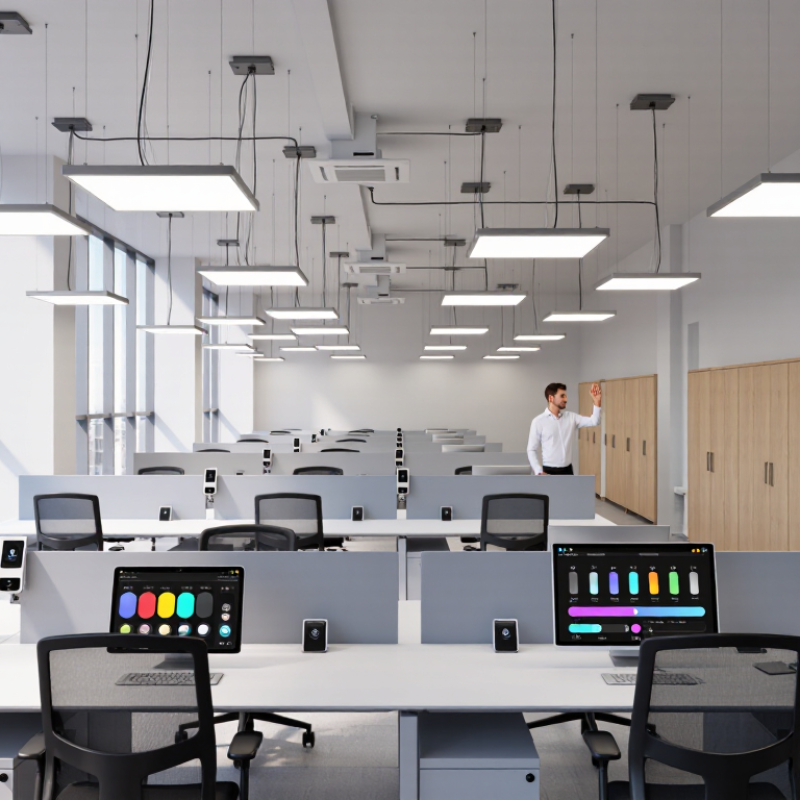
The opportunity is tangible. A connected office can dim lights near bright windows, detect empty desks, and record energy use automatically. Sensors can also support healthier routines through adjustable color temperature. However, a dashboard may look intelligent while occupants still feel uncomfortable. Lighting educator Howard Brandston stated, “Good lighting is not about how much light you have, but how you use it.” His principle remains relevant as artificial intelligence, wireless controls, and human-centric lighting develop.

Reports from the U.S. Department of Energy show the continuing efficiency potential of LED systems, while IoT Analytics reports rapid growth in connected devices across buildings and cities. Together, these findings point toward integrated lighting networks rather than isolated fixtures. Yet the industry still faces uneven standards and difficult retrofits. Older buildings may need new wiring, gateways, or skilled commissioning. That detail is easy to overlook.

This guide examines how facility managers, designers, and technology buyers can prepare for 2026. It considers adaptive controls, data privacy, interoperability, maintenance, and measurable return on investment. The smartest choice may not be the most automated one. Sometimes, reliable simplicity wins.

How to Prepare for Future Trends in Smart Lighting 2026?

Assess Lighting Baselines Against the IEA’s 15% Global Electricity Share

How to Prepare for Future Trends in Smart Lighting 2026?

The International Energy Agency estimates that lighting represents about 15% of global electricity consumption. That figure makes every lighting baseline commercially important. Before planning 2026 upgrades, facility teams should record annual lighting electricity, floor area, operating hours, and peak demand. The numbers must come from meters, not assumptions. The IEA’s Energy Efficiency 2023 report also links efficient lighting with wider demand reduction opportunities. Yet, a baseline using only fixture wattage remains incomplete.

Measure the room, too. Record occupancy, daylight levels, switching patterns, and maintenance intervals across representative spaces. A warehouse aisle may need light for twelve hours, while a meeting room may stay empty most of the day. The 2024 Global Status Report for Buildings and Construction reports that buildings consume around 32% of global energy. That context strengthens the case for responsive controls. However, savings projections often look cleaner than real operations.

Our first baseline was wrong. We ignored cleaning schedules and manual overrides. That mistake matters. In 2026, connected lighting should be judged against verified kilowatt-hours per square metre, not sensor counts. Compare pre-installation and post-installation data through matching seasons. Keep exceptions visible. A control system that saves energy but frustrates occupants may be disabled quietly. Industry forecasts can guide investment, but measured performance should decide it.

Prioritize LED Upgrades Using DOE Data: 75% Less Energy, 25× Longer Life

How to Prepare for Future Trends in Smart Lighting 2026?

Prioritize LED upgrades before adding complex smart features. U.S. Department of Energy data shows LEDs use up to 75% less energy than incandescent lighting. They can also last up to 25 times longer. These figures make LED replacement a practical starting point for homes, offices, and public facilities.

Begin with areas that stay lit for many hours, such as corridors, workshops, kitchens, and parking entrances. Record current wattage, operating hours, and replacement costs. Then compare those figures with the proposed LED system. Check lumen output, color temperature, dimming compatibility, heat management, and expected lifetime. A poor retrofit can create glare or uneven lighting. More efficient does not always mean more comfortable.

Leave room for future controls. Occupancy sensors, daylight adjustment, remote monitoring, and energy reporting will become more common by 2026. However, installing every feature immediately may waste money. The first estimate may be wrong. Usage patterns often change after installation. Review energy readings after three months, and adjust schedules or brightness levels. Choose equipment with clear technical documentation and replaceable components when possible. Reliable planning depends on measured performance, not attractive promises.

How to Prepare for Future Trends in Smart Lighting 2026? - Prioritize LED Upgrades Using DOE Data: 75% Less Energy, 25× Longer Life
Planning comparison for LED-first and smart-lighting upgrades
Planning Dimension Conventional Incandescent Baseline LED Upgrade Benchmark Verified Data Point 2026 Planning Priority
Electricity consumption Uses 100% of the baseline electricity for equivalent light output. Uses approximately 25% of the baseline electricity. Up to 75% less energy Replace the highest-use lamps first, especially in corridors, offices, retail areas, and exterior spaces.
Rated operating life Approximately 1,000 hours for a typical incandescent lamp. Approximately 25,000 hours for a typical general-service LED lamp. Up to 25× longer life Use long-life LED products in locations where lamp replacement requires lifts, shutdowns, or specialist labor.
Illustrative annual energy use A 60-watt lamp operated for 1,000 hours uses 60 kWh. A 15-watt LED operated for 1,000 hours uses 15 kWh. 45 kWh saved per lamp-year Multiply the saving by the number of lamps and operating hours to estimate site-level impact.
Replacement frequency At 1,000 operating hours per year, replacement is expected about once per year. At 1,000 operating hours per year, rated life is about 25 years. Fewer maintenance visits Prioritize hard-to-access fixtures and areas with frequent service interruptions.
Heat generation Most electrical input becomes heat rather than visible light. Produces less waste heat for comparable general illumination. Reduced cooling burden potential Evaluate LED upgrades in continuously occupied or cooling-dominated spaces.
Dimming and controls readiness Basic dimming is possible, but legacy fixtures may not support connected control systems. Many LED luminaires are available with dimming, occupancy-sensing, daylight-responsive, and network-control options. Supports layered control strategies Specify compatible drivers, control protocols, and commissioning requirements before installation.
Smart-lighting upgrade sequence Energy savings are limited when inefficient lamps remain the primary load. LED conversion creates the efficient hardware base for sensors, scheduling, monitoring, and adaptive lighting. LED first, controls second Complete a lighting inventory, upgrade priority fixtures to LED, then add controls where operating patterns justify them.
Measurement approach Track lamp wattage, operating hours, replacement count, and maintenance labor. Track energy use, runtime, dimming levels, occupancy response, and light-quality feedback. Use before-and-after verification Record baseline conditions and compare post-upgrade electricity use and maintenance activity.
Data basis: U.S. Department of Energy guidance commonly states that residential LED products use at least 75% less energy and last up to 25 times longer than incandescent lighting. The 60-watt versus 15-watt example is an illustrative calculation using the 75% reduction benchmark: 1,000 operating hours × 45 watts saved = 45 kWh saved.

Design Around DALI-2, Matter, and Thread Interoperability Standards

How to Prepare for Future Trends in Smart Lighting 2026?

Design Around DALI-2, Matter, and Thread Interoperability Standards

Smart lighting in 2026 will depend less on isolated fixtures and more on dependable interoperability. Design around DALI-2 for wired luminaire control, Matter for application-level communication, and Thread for efficient wireless networking. Each solves a different problem. They should not be treated as interchangeable.

During planning, map every device path from sensor to fixture. A ceiling sensor may send occupancy data through Thread, cross a border router, and reach a Matter controller. The controller can then translate intent into DALI-2 commands through a tested gateway. Specify fallback behavior when the network fails. Lights should still support safe local operation and manual control. Keep addressing, scenes, and dimming limits documented.

Commissioning deserves more attention than glossy renderings. Test a crowded wireless space, not only an empty room. Check startup times, multicast behavior, firmware updates, and recovery after power loss. Verify that emergency functions remain independent and comply with local requirements. I would not promise perfect interoperability from a standards list. Different implementations can expose gaps. Not interchangeable. A simple pilot room can reveal problems early. Leave spare capacity in panels, conduits, and network planning. That modest expense may prevent painful redesign later.

Preparing for Smart Lighting Trends in 2026

Design around complementary interoperability layers: DALI-2 for wired lighting control, Thread for low-power IP-based networking, and Matter for application-level device interoperability. The timeline highlights major public specification milestones that can guide long-term product planning.

Milestone years represent publicly released specifications or certification programs, not market-share or adoption figures.

Plan Sensor Networks for Occupancy, Daylight, and Adaptive Controls

In 2026, smart lighting planning will begin with a sensor map, not a fixture catalog. Divide each zone by occupancy patterns, daylight exposure, ceiling height, and task needs. A meeting room needs different detection from a corridor. Use ceiling sensors for broad coverage, then test blind spots near partitions and storage shelves. Do not assume one sensor serves every purpose.

Occupancy data should trigger dimming, switching, and gradual restoration after movement stops. Set practical timeouts, such as ten minutes in offices and shorter periods in low-traffic spaces. Daylight sensors need careful placement away from windows, reflective desks, and direct luminaire output. During commissioning, record readings at the workplane under clear and cloudy conditions. Small errors matter. A sensor reading 15 percent too high can leave desks uncomfortable and waste energy through unnecessary compensation.

Adaptive controls work best when scenes respond to schedules, occupancy, daylight, and user overrides. Keep manual controls available, because people notice glare faster than dashboards do. Use encrypted communication, role-based access, and minimal data retention for occupancy information. Test failure modes: lights should remain safe and usable if a sensor, gateway, or network link stops responding. A common planning mistake is treating calibration as a final task. It belongs in the operating budget, with seasonal reviews and feedback from actual occupants. No system is perfect.

Measure ROI, Cybersecurity, and Carbon Reductions Through 2026 Metrics

How to Prepare for Future Trends in Smart Lighting 2026?

Smart lighting plans need measurable outcomes, not attractive dashboards. The 2023 Global Status Report for Buildings and Construction found that buildings used 34% of global energy and produced 37% of energy-related emissions in 2022. Lighting can therefore support carbon goals, but only when performance is measured against a reliable baseline. Record monthly kWh per square meter, operating hours, occupancy, lux levels, maintenance tickets, and peak demand. Compare these figures with the previous 12 months. Then calculate payback from verified energy savings, reduced lamp replacement, and avoided downtime.

Use a simple carbon equation. Energy savings multiplied by the local grid emission factor gives location-based reductions. Report market-based figures separately when applicable. Set 2026 targets, such as a 20% lighting-energy reduction and fewer than two comfort complaints per 1,000 occupied hours. These targets may be imperfect. Occupancy changes, daylight, and weather can distort results. The model will be wrong sometimes.

Cybersecurity must enter the ROI calculation. NIST’s Cybersecurity Framework 2.0 emphasizes asset inventories, identity controls, monitoring, and recovery. Apply those controls to every gateway, sensor, and software interface. Track unpatched devices, failed login attempts, security incidents, and mean recovery time. A low-energy system is not successful if one weak device disrupts operations. Review supplier access quarterly, segment lighting networks, and test manual controls before failures occur.η

FAQS

Why should LED upgrades come before advanced smart features?

LEDs can use up to 75% less energy and last up to 25 times longer. Begin with practical savings. Complex controls can wait.

Which areas should receive LED upgrades first?

Start with corridors, workshops, kitchens, and parking entrances. These spaces often stay lit for many hours. Record wattage and operating time.

What information should be compared before replacing lighting?

Compare current energy use, replacement costs, lumen output, and expected lifetime. Also check color temperature, dimming support, and heat management. The first estimate may be wrong.

Can a more efficient LED system create problems?

Yes. Poor retrofits may cause glare, dark patches, or uncomfortable color. Efficient does not always mean pleasant. Test the room at night.

Which smart features may become more useful by 2026?

Occupancy sensing, daylight adjustment, remote monitoring, and energy reporting may become more common. Install only what supports real usage. Extra features can waste money.

How can a lighting system remain ready for future controls?

Leave spare space in panels, conduits, and network plans. Choose equipment with clear documents and replaceable components. Keep manual control available.

How should wired and wireless lighting systems work together?

Map each path from sensor to fixture. A sensor may send data wirelessly to a controller, which issues wired dimming commands. These functions are different.

What should happen when the lighting network fails?

Lights should keep safe local operation and manual control. Test power-loss recovery, startup time, and crowded wireless conditions. Do not assume perfect interoperability.

How should a new system be tested after installation?

Run a pilot room before expanding. Review energy readings after three months and adjust schedules or brightness. Real performance matters more than attractive promises.

Conclusion

Preparing for Future Trends In Smart Lighting Technology in 2026 requires a practical, measurable strategy. Organizations should first assess their current lighting systems against the fact that lighting represents approximately 15% of global electricity use. Upgrading outdated fixtures to efficient LED solutions can significantly reduce energy consumption while offering longer service life and lower maintenance needs. This creates a strong foundation for future improvements and supports more responsible carbon management.

Next, lighting designs should prioritize interoperability through open standards such as DALI-2, Matter, and Thread, allowing different devices and systems to work together more effectively. Sensor networks can then support occupancy detection, daylight harvesting, and adaptive controls that adjust lighting to real-time conditions. By 2026, organizations should track energy savings, operating costs, carbon reductions, system reliability, and cybersecurity performance. Measuring these results will help confirm return on investment while ensuring that smart lighting remains efficient, flexible, secure, and prepared for continued technological change.

Aria

Aria

Aria is a dedicated marketing professional with a deep passion for innovative strategies and a keen understanding of our company's product offerings. With a wealth of experience in the industry, Aria excels at crafting engaging content that highlights the unique features and benefits of our......