Why Do Lighting Standards and Certifications Matter?

Time:2026-10-15 Author:Charlotte
0%

A light can look bright while wasting energy, creating glare, or disturbing sleep. That is why Lighting Efficiency Standards And Certifications matter beyond simple electricity savings. They translate technical claims into measurable evidence, including efficacy, lifetime, color quality, flicker, and photobiological safety.

The International Energy Agency reports that lighting uses about 15% of global electricity consumption. The U.S. Department of Energy also states that ENERGY STAR certified LED bulbs use at least 75% less energy than incandescent bulbs and last up to 25 times longer. These figures show the value of efficient products. They do not tell the whole story. Poor installation can still produce glare, uneven illumination, or uncomfortable blue-rich light.

Dr. Mariana Figueiro, a leading lighting researcher and former director of the Lighting Research Center, has said, “Light is the strongest synchronizer of the circadian system.” Her observation expands the conversation beyond watts and payback periods. Standards such as IES LM-79, IES LM-80, IEC 62471, and ENERGY STAR help buyers compare performance more responsibly. Independent testing also reduces the risk of exaggerated manufacturer claims.

Yet certification is not a magic stamp. Labels can confuse inexperienced buyers, and a compliant product may still suit the wrong room. That uncomfortable detail deserves attention. Good lighting requires verified products, skilled design, proper controls, and real-world evaluation. The best standards support better decisions, but human judgment remains essential.
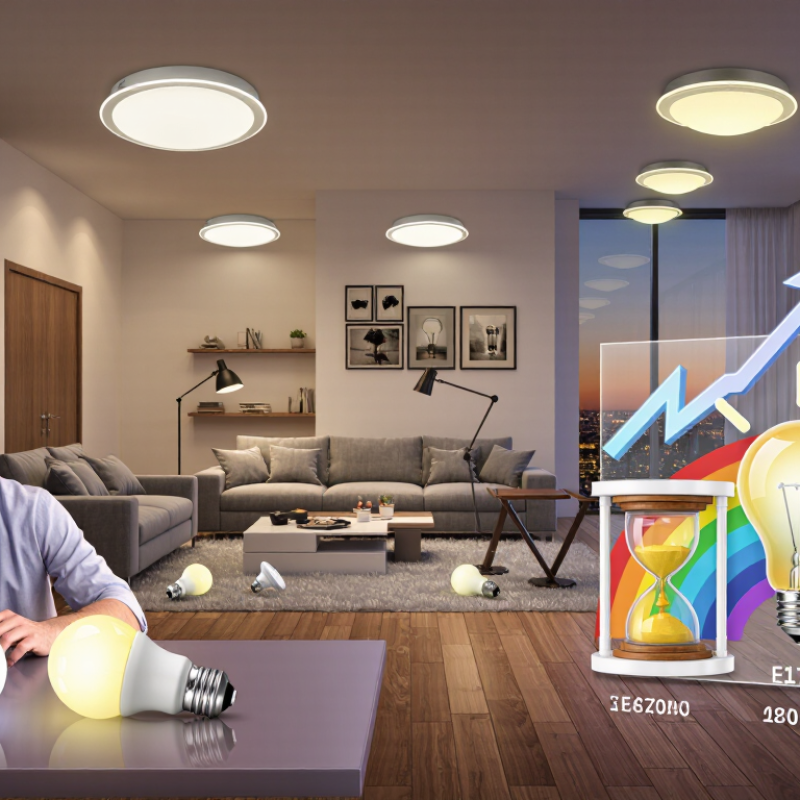
Why Do Lighting Standards and Certifications Matter?

What Are Lighting Standards and Certifications?

What Are Lighting Standards and Certifications?

Lighting standards are technical rules for safety, performance, efficiency, and compatibility. They define details such as electrical insulation, heat control, photometric accuracy, and flicker limits. Certifications show that a product was tested against specific requirements. They are not identical. A standard describes the target; certification provides documented evidence of compliance.

The International Energy Agency reports that lighting uses about 15% of global electricity. The U.S. Department of Energy also reports that LED products can use at least 75% less energy than incandescent lighting. These figures explain why reliable testing matters. A poorly controlled fixture may create glare, overheating, color inconsistency, or early failure. In practice, check the certificate’s scope, test date, product model, and laboratory accreditation. A familiar approval mark alone is not enough.

Tips: Match the certificate to the installation environment. Review ingress protection for damp areas. Check color rendering, flicker performance, and rated lifetime. Ask for test reports, not only marketing claims. Standards also evolve, and one certificate may become outdated. That is easy to miss. The framework is useful, but it is not flawless. Different regions may apply different editions or testing methods. Buyers should keep questioning the evidence.

How Lighting Standards Define Safety, Quality, and Performance

Lighting standards turn technical claims into measurable checks. They define electrical safety, heat tolerance, photometric accuracy, color quality, and operating life. A compliant luminaire should survive voltage changes, repeated switching, and enclosed installation without creating unacceptable risks. It should also deliver the stated brightness in a real room, not only inside a laboratory.

The International Energy Agency reports that lighting uses about 15% of global electricity. This makes efficiency testing commercially and environmentally important. Standards help compare efficacy, measured in lumens per watt, while performance reports reveal flicker, glare, color rendering, and lumen maintenance. A 2023 U.S. Department of Energy report found that solid-state lighting could reduce national lighting energy use substantially through higher efficacy and longer service life. Numbers matter.

A practical inspection still needs more than a certificate. Check the label, test conditions, operating temperature, and photometric file. A lamp rated at 25°C may perform differently above a warm ceiling. Certification also cannot predict every installation problem. Dust, poor ventilation, and incompatible controls can reduce performance. This is where judgment matters. Standards provide a reliable floor, not a perfect ceiling. Their value depends on honest testing, traceable documents, and regular review as technology changes.

Why Do Lighting Standards and Certifications Matter?

How lighting standards define safety, quality, and performance

What the data shows: Under IEC 60529, the IPX water-protection rating progresses from no protection at IPX0 to protection against continuous immersion at IPX8. For lighting products, standards such as IEC 60598-1 address luminaire safety, while IEC 62471 evaluates photobiological risks. Certification provides documented evidence that a product has been assessed against defined requirements; it does not mean that every certified product has identical performance.

Source basis: IEC 60529 ingress-protection classifications; IEC 60598-1 luminaire safety requirements; IEC 62471 photobiological safety evaluation.

Which Organizations Create and Enforce Lighting Requirements?

Why Do Lighting Standards and Certifications Matter?

Which Organizations Create and Enforce Lighting Requirements?

Lighting requirements come from several layers of authority. International technical organizations develop shared methods for measuring brightness, glare, color quality, and electrical safety. Their documents help engineers compare results across countries. They usually create guidance, not legal penalties.

National governments turn selected requirements into building, energy, workplace, or public-safety rules. Local authorities may add stricter limits for roads, offices, schools, and residential areas. Inspectors then review drawings, permits, installations, and test records. Enforcement can vary widely between regions.

Independent certification bodies and accredited laboratories test lighting equipment against recognized standards. They may check insulation, heat, light output, flicker, and emergency performance. Certification supports trust, but it is not permission to ignore local law. A certified product can still fail a building inspection.

In real projects, professionals often use a light meter after installation. They check whether work surfaces receive enough light without uncomfortable glare. A hallway may look bright, yet still contain dangerous dark patches. Small details matter.

The process is not perfect. Rules can lag behind new controls, sensors, and connected systems. Inspectors may also interpret requirements differently. Clear records and qualified review remain essential.

A label alone proves very little.

How Lighting Products Are Tested and Certified

Lighting products are tested to prove that their performance is safe, measurable, and repeatable. A laboratory may measure lumen output, color temperature, color rendering, flicker, and beam distribution. These results show how a fixture behaves, not merely how bright it appears in a showroom. Small details matter. A dusty lens can reduce output.

Safety testing examines insulation, grounding, electrical strength, surface temperature, and protection against moisture or dust. Thermal tests often run the product for extended periods inside controlled chambers. Engineers record temperature changes at LED boards, drivers, housings, and connection points. Electromagnetic compatibility testing checks whether the fixture creates interference or reacts poorly to nearby equipment. The process can expose weaknesses that ordinary installation never reveals.

Certification normally follows testing against recognized safety or performance requirements. Qualified laboratories review samples, test methods, factory controls, and technical records. A reliable certificate should identify the product, applicable standard, test limits, and certification scope. It should also be traceable to current documents. A certificate is not a promise of perfect performance. Samples may differ from later production, and installation conditions can change results. I have seen specifications look convincing until wiring, dimming, or ventilation altered the outcome. That gap deserves honest attention. Installers and buyers should compare test reports with the actual model, operating environment, and maintenance plan.

How Standards and Certifications Benefit Users and the Environment

Why Do Lighting Standards and Certifications Matter?

Lighting standards and certifications help users make safer, clearer, and more responsible choices. They test performance, electrical safety, glare control, and energy use under defined conditions. A certified fixture is not automatically perfect. However, it offers evidence beyond attractive packaging or impressive claims.

In practical lighting assessments, small details often affect daily comfort. A reading lamp with controlled glare can reduce eye strain near a desk. Stable color quality can make food, fabrics, and skin tones appear more natural. Efficient lighting also uses less electricity and may last longer, reducing replacement waste. Environmental benefits depend on real operation, not only laboratory ratings. Poor installation or excessive brightness can erase some expected savings. That part deserves more attention.

Tips: Check the certification scope, test date, and applicable performance standards. Compare measured brightness, color quality, power demand, and expected lifetime. Choose suitable brightness for each room, then install controls such as dimmers or occupancy sensors. Keep product documents for maintenance and future replacement. Ask whether parts can be repaired or recycled. Labels can be confusing. A qualified lighting professional can explain unclear results and identify risks such as glare, heat, or uneven illumination. Certifying bodies and independent laboratories should publish traceable testing information, though access and detail may vary. Users should still question vague environmental language and unusually broad promises.

Why Do Lighting Standards and Certifications Matter? - How Standards and Certifications Benefit Users and the Environment

Standard or Certification Area Main Evaluation Dimension Relevant Technical Data Benefit to Users Environmental Contribution Typical Verification Method
EN 12464-1
Light and lighting of indoor workplaces
Visual performance and workplace lighting quality Maintained illuminance, uniformity, glare rating, colour rendering, and lighting limits for defined tasks and spaces Supports visual comfort, task accuracy, safety, and consistent lighting design Encourages efficient lighting layouts by matching light levels to actual activities instead of over-lighting spaces Lighting calculations, on-site illuminance measurements, and design documentation
ISO/CIE 8995-1
Lighting of indoor work places
Human-centred visual conditions in indoor work environments Illuminance, luminance distribution, glare control, colour quality, daylight integration, and maintenance considerations Helps reduce visual fatigue and improves the predictability of lighting conditions Promotes efficient use of daylight, suitable maintenance schedules, and longer-lasting lighting systems Professional lighting design review and measurement of completed installations
IEC 62471
Photobiological safety of lamps and lamp systems
Potential optical hazards from light sources Assessment of ultraviolet, visible-light, and infrared exposure; risk groups range from Exempt Group to Risk Group 3 Provides information for safer product selection, installation, viewing distance, and exposure management Encourages responsible product design and reduces the risk of unsuitable applications or unnecessary replacement Laboratory measurement of spectral irradiance, radiance, exposure limits, and risk classification
IEC 60598-1
Luminaires: general safety requirements
Electrical, mechanical, thermal, and constructional safety Protection against electric shock, abnormal operation, heat, moisture, mechanical stress, and fire-related risks Reduces the likelihood of electric shock, overheating, premature failure, and unsafe installation Better durability and thermal design can extend service life and reduce discarded equipment Type testing, construction inspection, electrical tests, temperature tests, and abnormal-condition tests
Energy-efficiency performance requirements Electrical energy use and useful light output Input power, luminous flux, efficacy in lumens per watt, standby power, control functionality, and product lifetime information Makes it easier to compare operating costs and select products that deliver more light for less electricity Lower electricity consumption reduces operational greenhouse-gas emissions where electricity generation produces emissions Photometric testing, electrical power measurement, endurance testing, and technical-file review
EU RoHS Directive 2011/65/EU
Restriction of hazardous substances
Material composition and restricted substances in electrical and electronic equipment Restricts ten substance groups, including lead, mercury, cadmium, hexavalent chromium, and certain flame retardants and plasticisers, subject to applicable limits and exemptions Reduces exposure risks during normal use, maintenance, recycling, and end-of-life handling Limits hazardous material entering manufacturing waste streams, recycling processes, and disposal systems Material declarations, supplier records, technical documentation, and laboratory chemical analysis where required
IEC 62423 and IEC 61347 series
LED and controlgear safety
Compatibility and safe operation of LED modules, drivers, and controlgear Electrical insulation, dielectric strength, abnormal operation, temperature limits, protection, and operating compatibility Improves system reliability and helps prevent flicker, overheating, electrical faults, and premature driver failure Reliable controlgear can reduce replacement frequency and electronic waste over the product life Electrical safety tests, thermal tests, endurance assessments, and compatibility checks
Environmental product declarations
Life-cycle transparency
Environmental impacts across the product life cycle May report global warming potential, primary energy use, resource consumption, water use, and waste indicators using life-cycle assessment rules Allows purchasers to compare environmental information using a defined reporting framework rather than marketing claims alone Highlights impacts from raw materials, manufacturing, electricity use, transport, maintenance, and end-of-life treatment Life-cycle assessment, product-specific data review, and independent verification under applicable program rules
Quality-management certification
Manufacturing consistency
Repeatability of design, production, inspection, and corrective-action processes Documented procedures, traceability, calibration, non-conformance control, supplier management, and continual improvement Improves confidence that products will meet declared performance and safety specifications consistently Process control can reduce defects, rework, rejected products, material waste, and unnecessary transport Independent audit of the management system, records, production controls, and corrective actions

Note: A standard defines technical requirements or test methods, while a certification or declaration confirms conformity within a defined scope. Requirements, limits, exemptions, and verification procedures depend on the applicable edition, jurisdiction, product type, and intended use.

FAQS

What do lighting standards measure?

They measure electrical safety, heat tolerance, brightness, color quality, flicker, glare, and operating life. Numbers matter.

Does certification guarantee perfect lighting performance?

No. Certification shows tested compliance under defined conditions. It cannot predict every installation problem. Dust, poor ventilation, or incompatible controls may reduce performance.

What does a lighting laboratory usually test?

A laboratory may measure lumen output, color temperature, color rendering, flicker, and beam distribution. The test reveals behavior. Not just showroom brightness.

Why are thermal tests important?

Thermal tests examine heat at LED boards, drivers, housings, and connection points. A lamp rated at 25°C may perform differently inside a warm, enclosed ceiling.

What safety details should buyers check?

Check insulation, grounding, electrical strength, surface temperature, and moisture or dust protection. These details can reveal risks hidden during ordinary installation.

How can users judge a certificate?

Confirm the exact model, certification scope, test date, applicable standard, and traceable documents. A certificate for a similar model may not apply. That mistake happens.

How do lighting standards support energy efficiency?

Standards help compare efficacy, measured in lumens per watt. Efficient products can use less electricity and last longer. Real savings still depend on controls, brightness, and installation.

How do installation conditions change lighting results?

Dusty lenses can reduce output. Poor ventilation can increase heat. Incompatible dimmers may affect operation. The laboratory is not the room.

What lighting features improve everyday comfort?

Controlled glare can reduce eye strain near a desk. Stable color quality can make food, fabrics, and skin tones appear more natural. Too much brightness remains uncomfortable.

What should users do before choosing a fixture?

Compare measured brightness, color quality, power demand, and expected lifetime. Check the photometric file and operating temperature. Ask whether parts can be repaired or recycled. I might trust labels too quickly, so reviewing the installation plan is wise.

Conclusion

Lighting standards and certifications are essential frameworks that help ensure lighting products are safe, reliable, efficient, and suitable for their intended environments. They establish clear requirements for electrical safety, material quality, performance, durability, energy use, and light output. Independent standards organizations, testing laboratories, and regulatory authorities work together to develop, evaluate, and enforce these requirements. Through inspections, laboratory testing, documentation reviews, and certification procedures, manufacturers can demonstrate that their products meet recognized technical and safety criteria.

Lighting Efficiency Standards And Certifications also provide important benefits for users and the environment. Certified products can offer more consistent performance, lower energy consumption, longer service life, and reduced maintenance needs. They help buyers compare products with greater confidence and reduce the risk of unsafe or inefficient installations. In addition, efficiency requirements encourage responsible product design, limit unnecessary energy waste, and support broader efforts to reduce environmental impact. Understanding these standards allows homeowners, businesses, designers, and facility managers to make informed lighting decisions based on safety, quality, performance, and sustainability.

Charlotte

Charlotte

Charlotte is a seasoned marketing professional with a deep understanding of the company's portfolio and a passion for elevating its presence in the market. With a keen eye for detail and a commitment to excellence, she ensures that our professional blog is regularly updated with insightful articles......