SMOG Lights
Featured Engineering & Architectural Luminaires
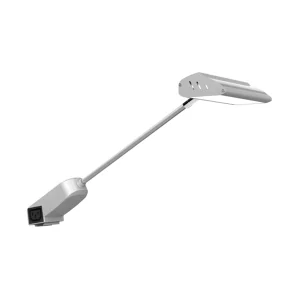
High-efficacy architectural LED fixtures engineered for commercial applications, combining robust ingress protection with smart control capabilities.
1. Global Landscape of Commercial & Industrial Outdoor Lighting
The global transition toward high-efficacy solid-state lighting (SSL) has reshaped the infrastructure landscape of municipalities, industrial corridors, ports, and sports arenas. Today's commercial outdoor lighting sector is no longer merely about lumens; it is about spectral distribution, digital lighting controls (IoT integration), architectural visual comfort, and aggressive decarbonization goals. With national energy frameworks across North America (DLC Premium 5.1), Europe (ErP Directive), and the Asia-Pacific region tightening performance requirements, purchasing managers and engineering firms must analyze manufacturers through a strict matrix of operational parameters.
The global LED floodlight market size is expanding rapidly, driven by the replacement of antiquated High-Intensity Discharge (HID), Metal Halide (MH), and High-Pressure Sodium (HPS) fixtures. Industry estimates show a compound annual growth rate (CAGR) of over 11.4% through 2030. Modern applications span high-mast transport terminal platforms, maritime docks exposed to severe chemical oxidation, perimeter surveillance yards, and large-scale architectural facades. For enterprise buyers, selecting a Tier-1 supplier means evaluating their technical capabilities in thermal mitigation, electrical protection schemes, optical beam engineering, and cost-to-performance amortization ratios.
2. Key Criteria for Auditing High-Mast LED Flood Light Manufacturers
Establishing a shortlist of the top 10 LED floodlight manufacturers requires a deep dive into the engineering principles that distinguish municipal-grade fixtures from generic products. When evaluating a supplier, procurement and technical teams should prioritize the following performance pillars:
Thermal Management
High-power LED chips generate significant localized heat. Premium manufacturers use cold-forged aluminum housings, phase-change vapor chambers, or patented cooling fins that keep junction temperatures below 75°C, ensuring a L70 lifetime exceeding 100,000 hours.
Optical Precision
To prevent light pollution and optimize illumination uniformity, advanced fixtures utilize multi-layered asymmetric PMMA or polycarbonate lenses. These are designed to guide light precisely where it is needed, minimizing glare (UGR < 19) and spillover.
Driver & Surge Protections
The electrical heart of the luminaire is its driver. Industry leaders collaborate with top-tier driver brands (like Inventronics or Mean Well) to offer IP67 protection, low THD (< 10%), active power factor correction, and integrated 10kV/20kV surge protection devices (SPDs).
3. Technology Roadmap: The Next Generation of Solid-State Floodlighting
The evolution of high-output floodlighting is closely tied to advancements in semiconductor physics and network communications. As smart city initiatives expand, floodlight fixtures are transforming from standalone light sources into connected nodes within broader IoT ecosystems. The integration of 7-Pin NEMA receptacles and Zhaga Book 18 interfaces allows fixtures to seamlessly connect with smart phototells and mesh-network controllers.
From an optical engineering perspective, the transition from standard COB (Chip-on-Board) packages to high-density SMD (Surface Mounted Device) arrays has allowed manufacturers to fine-tune thermal distribution and achieve system-level luminous efficacies of up to 180 lm/W. Furthermore, advanced spectral tuning (Tunable White and RGBW systems) is becoming increasingly common in architectural and sports lighting. This allows operators to adjust the Correlated Color Temperature (CCT) dynamically from warm 2700K tones to crisp 5700K daylight, balancing aesthetic needs with biological and ecological considerations.
Environmental durability is another major area of research. Modern heavy-duty floodlights are engineered to withstand harsh atmospheres, featuring marine-grade C5-M anti-corrosion coatings, IP66 to IP68 water resistance ratings, and IK08 to IK10 impact protection indexes. This ensures long-term reliability in environments like petrochemical processing facilities and coastal shipping terminals.
Corporate Capability & Strategic Vision
Discover how Dongguan SMOG Lights Technology Co., Ltd. delivers high-performance commercial and industrial lighting solutions worldwide.
Located in Dongguan City, a major industrial hub in Southern China, Dongguan SMOG Lights Technology Co., Ltd. is an innovative enterprise specializing in lighting technology. Since its establishment, SMOG Lighting has been dedicated to bringing smarter, more eco-friendly, and highly efficient lighting solutions to global users. By combining branding, R&D, design, production, marketing, and service, SMOG Lighting brings together a team of seasoned industry experts to push the boundaries of lighting technology. Our diverse product portfolio spans advanced LED fixtures, semiconductor lighting, and intelligent control systems, satisfying demanding lighting requirements across a wide range of applications.

Enterprise Vision
To become a global leader in the lighting industry, delivering top-quality lighting solutions to customers worldwide.

Core Values
Create value for customers, opportunities for employees, and benefits for society.

Corporate Mission
Illuminate every place with light, driving efficiency and safety through advanced engineering.

Company Orientation
Professional Commercial Lighting Solutions Provider specializing in high-demand environments.
4. Macro Industrial Solutions and Localized Application Scenarios
Commercial floodlighting needs vary significantly based on the industry and installation location. A standardized design rarely fits all situations. For instance, a lighting layout designed for a shipping terminal will have vastly different optical requirements than one designed for a sports complex or an architectural facade.
A. Logistics Terminals & Heavy Industrial Yards
Logistics terminals operate 24/7, making safety and visual clarity paramount. Large distribution hubs require uniform illumination with minimal dark zones to prevent transport and handling accidents. For these areas, high-power floodlights with wide asymmetric optics are ideal. They provide excellent horizontal and vertical light distribution, allowing operators to easily read container IDs and shipping documents from the ground.
B. Sports Arenas & Recreational Facilities
Sports lighting requires high color fidelity and flicker-free operation. Modern HDTV broadcasting standards mandate a high Television Lighting Consistency Index (TLCI > 80) and Color Rendering Index (CRI > 90). The power supply unit must also feature low output ripple to prevent visual flickering on slow-motion replays. Advanced floodlighting solutions combine custom narrow-beam optics with laser aiming devices, ensuring precise light distribution while minimizing glare for players and spectators.
C. Ports and Severe Marine Environments
Coastal and maritime installations present some of the harshest environments for lighting fixtures. Exposure to salt spray, high humidity, and chemical contaminants can cause rapid corrosion. Top manufacturers address these challenges by using marine-grade copper-free aluminum alloys, electrostatically applied epoxy coatings, and chemical-resistant silicone gaskets. These features ensure long-term structural integrity and steady performance, even when subjected to intense pressure washing.
Technical & Engineering Q&A
Answers to common technical, electrical, and optical questions regarding high-power LED floodlights.
What causes LED driver failure in high-output outdoor luminaires?
Outdoor driver failures are typically caused by thermal stress, high voltage surges, or moisture ingress. When internal component temperatures exceed thermal limits, capacitors degrade much faster. Using drivers with robust built-in surge protection (at least 10kV/20kV line-to-earth) and selecting enclosures with high IP and thermal performance ratings help prevent these common issues.
How do NEMA ratings differ from IP (Ingress Protection) ratings?
NEMA ratings are established by the National Electrical Manufacturers Association and are common in North America. They evaluate protection against corrosion, ice, and dust. IP ratings, defined by IEC standards, focus specifically on protection against solid particles and liquid ingress. For example, a NEMA 4X rating offers similar protection to an IP66 rating, but with additional requirements for corrosion resistance.
Why is Luminous Efficacy more critical than wattage when selecting commercial fixtures?
Luminous Efficacy measures how efficiently a light source converts electricity into visible light (lumens per watt, lm/W). A newer 100W fixture with an efficacy of 160 lm/W will deliver the same light output (16,000 lm) as an older, less efficient 160W fixture operating at 100 lm/W. Focusing on efficacy allows facilities to reduce energy consumption without sacrificing light levels.
What is UGR, and why is it important for outdoor lighting applications?
Unified Glare Rating (UGR) is an approximate measure of glare in a given lighting installation. While historically associated with indoor workplaces, glare management is critical for outdoor settings like transportation terminals and sports yards. Maintaining a lower UGR (typically < 22, or < 19 for precision activities) improves safety and visibility for workers and drivers.
Advanced Commercial & Residential Lighting Fixtures
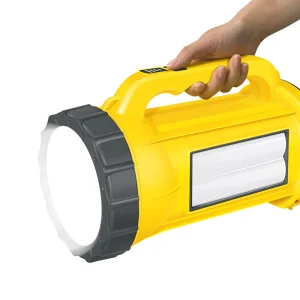
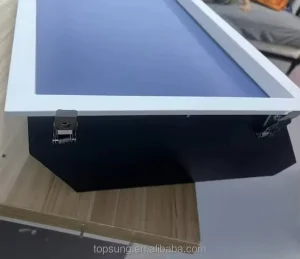
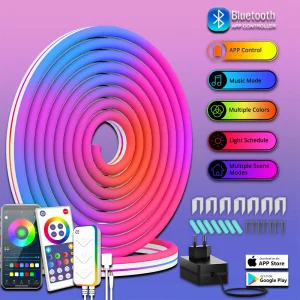
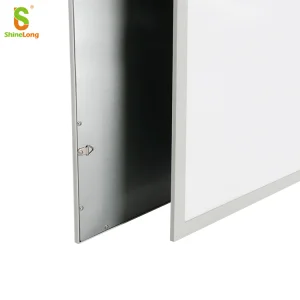
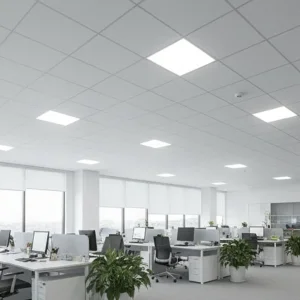
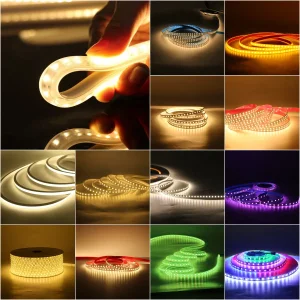
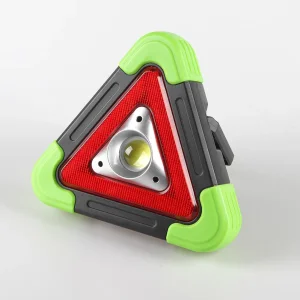
Explore our technical portfolio of interior panel lights, flexible architectural linear components, and portable emergency tools.