SMOG Lights
Top Trusted LED Pathway Lights Suppliers & Exporters
Global Industrial Grade Architecture, Low-Carbon Solutions, and Smart Controls for Outdoor Infrastructure.
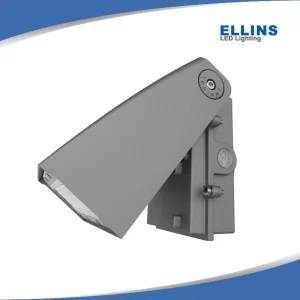
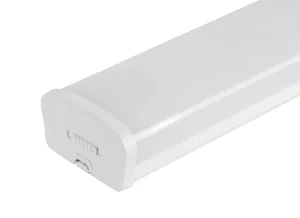
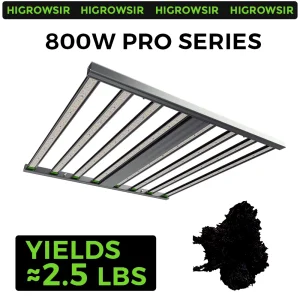
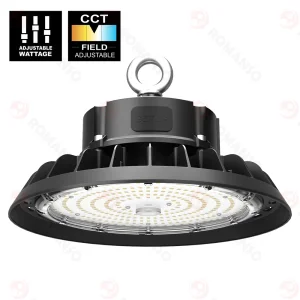
Commercial Luminaire Portfolio — Batch A
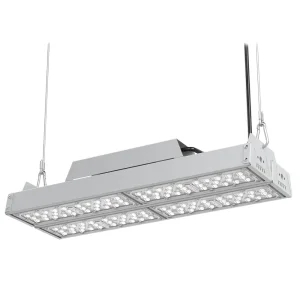
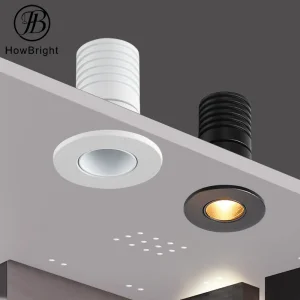
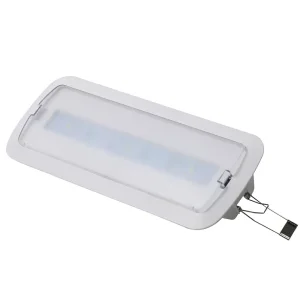
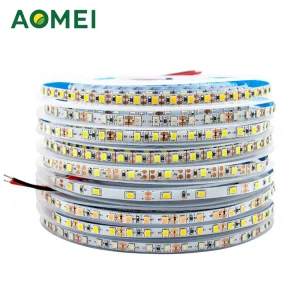
Premium architectural and commercial lighting systems engineered for global compliance, safety, and efficiency.
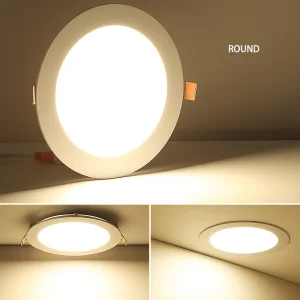
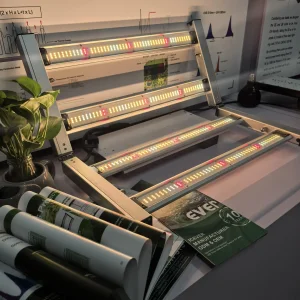
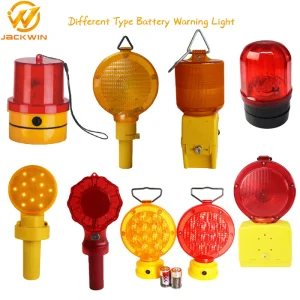
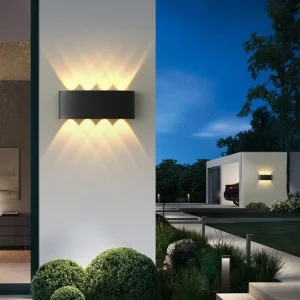
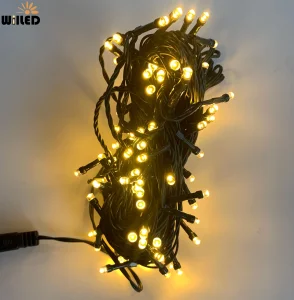
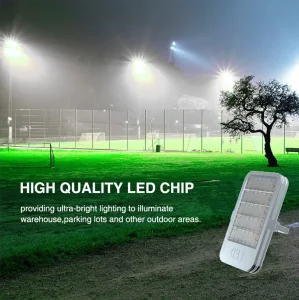
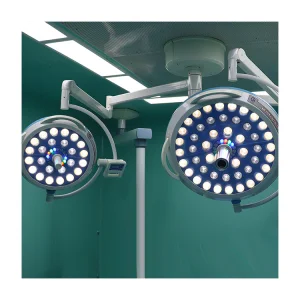
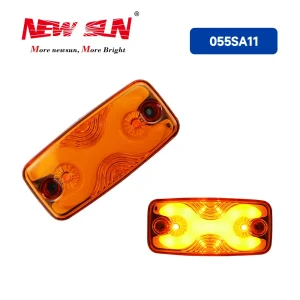
Global Commercial & Industrial Landscape
Analyzing key structural transformations in pathway illumination, energy policies, and architectural requirements.
Modern commercial and industrial zoning requires lighting solutions that go beyond simple visibility. Today, LED pathway lights sit at the intersection of urban design, municipal compliance, public security, and decarbonization strategies. Around the world, architectural planners and project engineers are transitioning away from high-pressure sodium (HPS) and metal halide fixtures toward intelligent solid-state lighting (SSL) architectures.
Municipal Green Mandates & Carbon Neutrality
Across the European Union, the United States, and the APAC region, strict regulatory frameworks like the EU Ecodesign Directive and the US Energy Policy Act are phasing out inefficient luminaires. These rules mandate high luminous efficacy (typically >130 lm/W) and integrated control systems to reduce local power consumption.
Smart Cities and IoT Integration
Outdoor pathway luminaires are no longer simple stand-alone fixtures. Instead, they serve as crucial nodes in wider Internet of Things (IoT) meshes. By integrating wireless transceivers (such as LoRaWAN, Zigbee, or cellular-enabled NB-IoT) directly into the housing via standardized Zhaga or NEMA sockets, municipalities can track power usage, automate dimming schedules, and detect outages in real-time.
Industrial Supply Chain and Export Dynamics
Meeting these global requirements demands high-capacity manufacturing centers capable of rigorous quality control. Industrial hubs in southern China, particularly in the Dongguan region, lead this space. These facilities use integrated supply chains to source premium raw materials, conduct precise thermal testing, and execute automated quality checks. Exporters must navigate a complex web of certifications to ship worldwide, including UL/cUL for North America, CE/RoHS for Europe, and SAA/C-Tick for Oceania.
Technology Roadmap & Materials Engineering
An inside look at thermal management, optical engineering, and electrical durability standards.
Building high-performance pathway lighting requires balanced materials science and electrical design. Because these fixtures must endure harsh environments—from freezing northern winters to intense coastal heat—every component must be engineered for long-term stability and reliability.
| Engineering Parameter | Standard Requirement | Advanced Industrial Benchmark |
|---|---|---|
| Housing Material | A360/A380 Die-Cast Aluminum Alloy | High-purity ADC12 with low-copper content (<0.1%) |
| Corrosion Resistance | 500-hour Salt Spray (ASTM B117) | 1000-hour marine-grade double powder coating (C5-M class) |
| Optical Diffuser | Standard Tempered Glass / Basic PC | UV-stabilized polycarbonate or PMMA with anti-glare micro-prismatic optics |
| Ingress Protection | IP65 Minimum | IP66 or IP67 hermetically sealed with breathable vents (Gore valves) |
| Impact Resistance | IK07 Rating | IK08 to IK10 vandal-proof structural design |
| Surge Protection (SPD) | 4kV / 6kV Rated | 10kV to 20kV surge protection device for grid stability |
Optical Precision & Light Pollution Mitigation
Modern pathway lights focus heavily on optical control. High-performance models feature custom lens arrays that distribute light precisely along the ground, avoiding spillover into neighboring properties or the night sky. In order to meet Dark-Sky Compliance, fixtures must have a zero Uplight rating (U0 within the BUG classification system: Backlight, Uplight, Glare).
Equally important is dynamic color temperature management. Multi-CCT fixtures allow operators to switch between 3000K (warm light for residential and park pathways), 4000K (neutral light for commercial developments), and 5700K (cool daylight for high-security industrial spaces). This flexibility makes it easier to tailor lighting to different settings while supporting local wildlife by minimizing disruptive blue light wavelengths.
Localized Applications & Deployment Scenarios
Tailored lighting architectures optimized for diverse environments, climates, and infrastructure goals.
Marine & Coastal Pathways
High relative humidity and airborne salt particles accelerate galvanic corrosion. Solutions deployed here require grade 316 stainless steel fasteners, premium ADC12 aluminum housings finished with a C5-M anti-corrosion coating, and fully potted IP67 LED drivers. This design shrugs off salt spray, ensuring long-term reliability in harsh shorelines.
Urban Transit & Municipal Walks
Public areas require rugged protection against vandalism, coupled with automated controls. IK10 impact-rated polycarbonate covers resist physical blows, while built-in microwave motion sensors drop energy use during quiet hours. Once a pedestrian is detected, the fixture smoothly returns to full brightness, keeping the area safe and well-lit.
Cold-Climate Logistic Hubs
Extreme cold can cause standard polymer seals to crack, letting moisture creep in. Heavy-duty pathway lights use custom silicone rubber gaskets designed to remain flexible down to -40°C. They also use specialized low-temperature starting drivers, ensuring prompt illumination even in deep winter conditions.
System Spacing and Photometric Layout Calculations
Engineers use specialized lighting software (such as AGi32 or Dialux) to plan effective pathway illumination. Key goals include meeting average illuminance targets (typically 5 to 15 lux) and maintaining a high uniformity ratio ($U_0 = E_{min}/E_{avg} \ge 0.4$) to eliminate dangerous dark patches.
By matching pole spacing to the light distribution pattern (for example, Type II or Type III asymmetric lenses), projects can achieve even light coverage with fewer poles. This reduces both the upfront material cost and ongoing electrical consumption.
About Dongguan SMOG Lights Technology Co., Ltd.
A trusted global partner in intelligent solid-state lighting and commercial illumination engineering.
Based in Dongguan City, southern China, Dongguan SMOG Lights Technology Co., Ltd. is an innovative enterprise specializing in high-performance lighting technology. Since our founding, we have focused on delivering smarter, eco-friendly, and efficient lighting solutions to clients worldwide. By combining design, research and development, manufacturing, and global marketing under one roof, we have built a reputation for reliable quality and technological innovation.

Become a leader in the lighting industry, delivering top-quality, high-reliability lighting solutions to customers worldwide.

Create long-term value for customers, pathways of development for employees, and environmental benefits for global society.

Illuminate every place with light, combining technology with human-centric industrial design to build sustainable communities.

Professional Commercial & Industrial Lighting Solutions Provider, bridging advanced research and development with scalable manufacturing.
Expert Q&A: Specification & Engineering
Addressing core mechanical, optical, and regulatory questions from system designers and buyers.
What parameters define high-quality thermal design in outdoor LED pathway luminaires?
Reliable thermal performance is determined by junction temperature (Tj) management. High-end pathway lights use integrated cast-aluminum fins designed through computational fluid dynamics (CFD) simulations. This structure rapidly moves heat away from the LED chips. Combined with high-conductivity thermal interface materials (TIMs), this keeps Tj well below 85°C (at an ambient temperature of 25°C), ensuring the light maintains its output over a long lifespan (L70/B50 > 50,000 hours).
How do pathway lights prevent glare while ensuring pedestrian comfort and security?
Glare control relies on precise lens engineering. Standard fixtures can create harsh hotspots, but commercial-grade luminaires use frosted, textured, or micro-prismatic optical elements to diffuse direct light. By recessing the LED chip into the housing and using shielding options (such as house-side shields), the design cuts down on high-angle glare (conforming to UGR ratings < 19). This keeps pathways safely lit without blinding pedestrians or drivers.
Why is a 10kV surge protection device (SPD) critical for municipal installations?
Outdoor lighting grids face frequent voltage spikes caused by lightning strikes, grid switching, and industrial motor loads. Without adequate protection, these transients can ruin sensitive LED drivers. An integrated 10kV (or optional 20kV) surge protector acts as a shield, diverting high-voltage spikes safely to the ground. This keeps the fixture running reliably and reduces costly field maintenance.
What is the difference between constant current and constant voltage systems in pathway design?
Constant current (CC) systems are preferred for outdoor luminaires because they feed a steady current directly to the LEDs, regardless of changes in temperature or forward voltage. This prevents thermal runaway and ensures uniform brightness across all fixtures. Constant voltage (CV) systems, by contrast, are typically used for flexible decorative strip lighting, where fixtures must be cut to custom lengths on-site.
How do smart control protocols (0-10V, DALI-2, LoRaWAN) integrate with outdoor pathways?
These protocols allow flexible dimming and monitoring. The standard 0-10V system uses analog control signals, while DALI-2 provides bidirectional digital communication, allowing operators to configure, monitor, and query individual fixtures. For large-scale municipal projects, integrating these systems with wireless nodes like LoRaWAN lets cities manage entire networks remotely through Central Management Software (CMS).
Commercial Luminaire Portfolio — Batch B
High-efficiency interior, commercial, and industrial luminaires engineered to match rigorous building codes.